

Ozone technology
Ozone technology
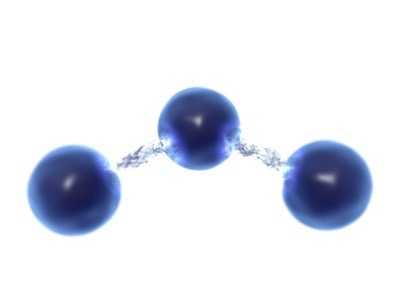
Ozone (O3) is an atmospheric gas consisting of 3 oxygen atoms, emitting a characteristic smell, reminiscent of chlorine. An ozone molecule is divided in a diatomic oxygen molecule (O2) and a single oxygen atom (O). The latest is characterized by highly reactivity, oxidizing both organic and inorganic components rapidly.
The application of ozone in water treatment is widespread throughout the world. Ozonation has been highlighted as an efficient technology for the oxidative reduction of several organic contaminants for water sources in short contact time. Additionally, ozone is effective against bacteria, spores, viruses and micro-pollutants elimination, and it improves water quality in terms of taste, odor and decoloration. Since it is easily decomposed, its production should be exclusively made on-site, where it will be used. Ozone as other disenfectants (e.g. chlorine etc.), is unstable in water and undergoes reactions with constituents conaining in the water. The half-life of ozone is on the order of minutes when dissolved in water, which is faster than pure oxygen dilution.
When ozone is dissolved, reverts back to oxygen, providing hundreds of times more dissolved oxygen in water than could otherwise be possible. It should be mentioned that it does not have any residual disinfection.
The unparalleled feature of ozone is the hydroxyl radicals (•OH) generation which seems to be the strongest oxidants in water. Once •OH are formed in water, they rapidly react with all present oxidizable materials.
O3 + H2O → HO3– + OH- → 2HO2
O3 + HO2 → 2O2 + OH
Therefore, contaminant oxidation occurs through reactions with ozone (O3), hydroxyl radicals (•OH) or a combination of both.
Nowadays, the only ozonation by-product regulated in drinking water is bromate, which is formed during ozonation of bromide-containing waters. The ozonation also leaves oxygenated products which in some applications such as aquaculture will be beneficial as the water is enriched with oxygen. In case of swimming pools, ozone addition should be prior to deozonation on a filter to prevent ozone elusion into the air in the swimmimg pool.
When using ozone, the following should be taken into consideration:
- Dissolution of the gas: It is important to know where in the system the ozone should be dissolved and to ensure that the dissolution occurs in a way that allows the water to contain the gas without the ozone starting to escape from the water.
- Gentle dissolution technology: Ozone is a highly unstable molecule, so the dissolution technology should be as gentle as possible to prevent the gas from breaking down before it reaches its intended destination.
- Minimizing transport time: The duration of gas transport should be as short as possible to minimize ozone decay and for safety reasons to avoid ozone in the workplace environment.
- Correct sizing: All of this is important to ensure that the amount of ozone purchased is the right size for the intended purpose.
Our projects
Selected projects demonstrating real-world applications of our technologies.
Contact Water
Have a question?
Do you have questions about technology, projects, or any other ozone-related topics? Do not hesitate to reach out. We are looking forward to hearing from you!
Contact us
Our terms
Water ApS is part of the OxyGuard International A/S.
OxyGuard International A/S is committed to protecting and respecting your privacy, and we’ll only use your personal information to administer your account and to provide the products and services you requested from us. From time to time, we would like to contact you about our products and services, as well as other content that may be of interest to you.
You may unsubscribe from these communications at any time. For more information on how to unsubscribe, our privacy practices, and how we are committed to protecting and respecting your privacy, please review our Privacy Policy.
By clicking submit below, you consent to allow OxyGuard International A/S to store and process the personal information submitted above to provide you the content requested.